Polyethylene Terephthalate, commonly known as PET, is one of the most widely used packaging materials in the world. It’s the material behind most clear beverage bottles, food containers, and many personal care packages found on store shelves today.
For small businesses ordering packaging for the first time, having a clear understanding of PET helps make choosing the right bottle and supplier much easier.
What Is PET (Polyethylene Terephthalate)?

PET is a thermoplastic polymer belonging to the polyester family. It is valued in packaging because it combines clarity, strength, lightweight performance, and food safety.
Key characteristics of PET include:
- High clarity and gloss (glass-like transparency)
- Excellent strength-to-weight ratio (lightweight and strong)
- Good barrier properties for moisture
- Impact resistance
- Recyclability (more on this below)
These properties make PET especially well-suited for:
- Beverages (waters, juices and carbonated drinks)
- Food products
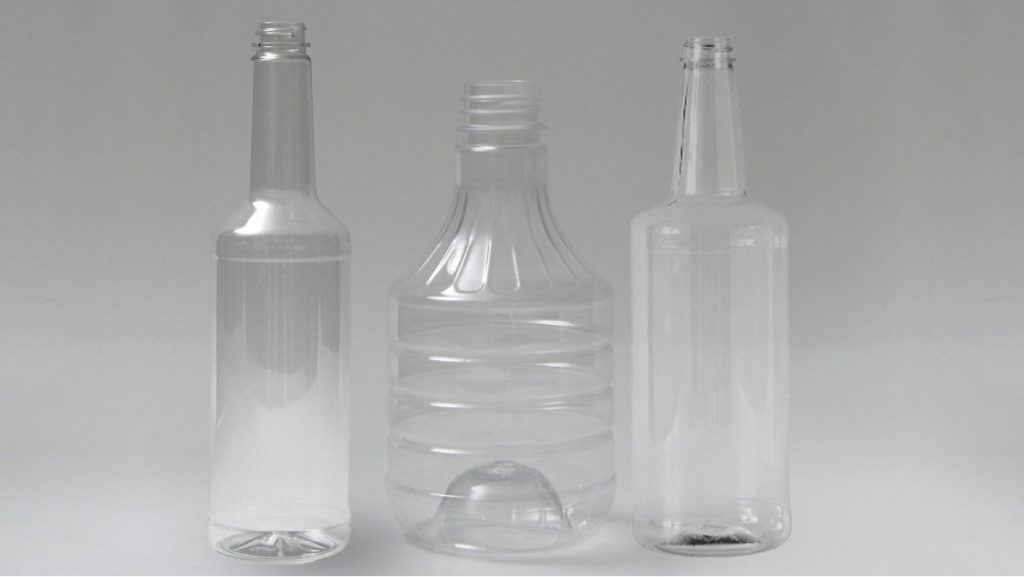
- Personal care and household products (lotions, skincare, cleaning agents)
Why PET Is Used for Blow-Molded Bottles
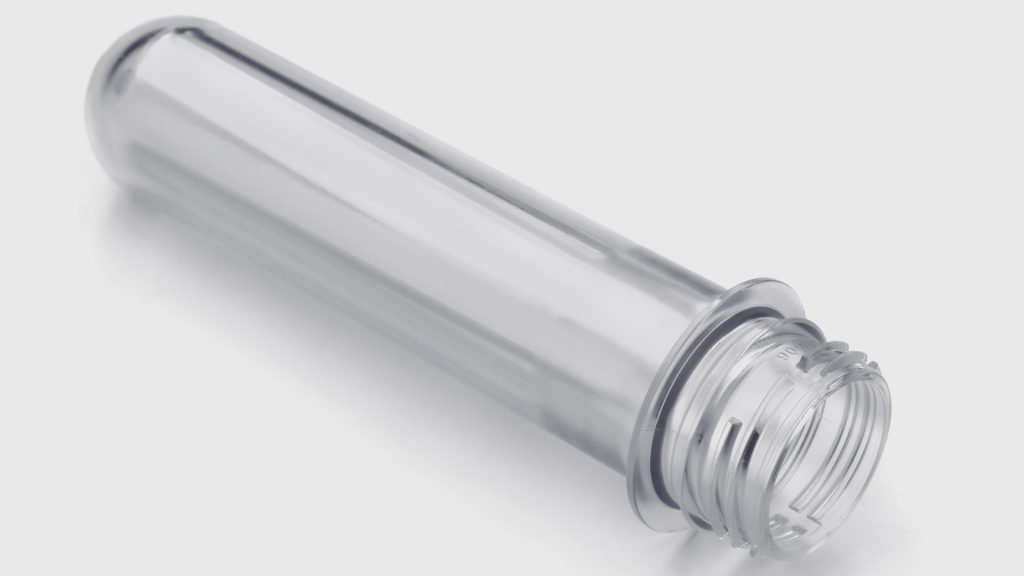
PET is uniquely compatible with the blow-molding process used to create bottles. This is because PET can be heated, stretched, and expanded in a very controlled way, then locked into shape with excellent strength and clarity. Not all plastics can do this reliably.
During blow molding PET is heated and becomes pliable and can be stretched and expanded inside a mold. Once cooled, it retains its shape while maintaining strength and clarity.
This makes PET ideal for:
- High-volume production
- Lightweight packaging
- Consistent wall thickness
- High-speed filling lines
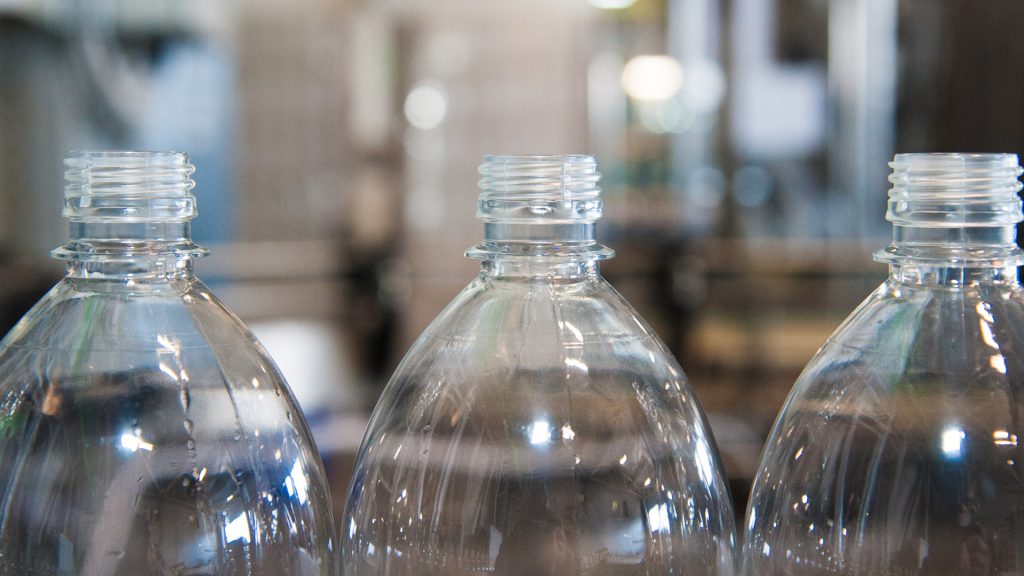
Because of this overall versatility, PET has become the industry standard for blow-molded bottles worldwide. Many popular sodas and water bottles you can find in convenience and grocery stores nationwide are produced with PET.

Is PET Safe for Food and Beverages?
Yes — PET is widely recognized as safe for food and beverage contact when produced and handled correctly.
PET used in packaging is manufactured to meet regulatory standards, including:
- FDA food-contact requirements
- International food safety regulations
- Industry-specific quality standards
Reputable PET manufacturers provide documentation confirming compliance for food and beverage applications.
PET and Bisphenol-A (BPA): Clearing Up Confusion
One of the most common questions consumers and businesses ask is whether PET contains Bisphenol-A (BPA). PET does not contain BPA.
BPA is a chemical historically used in the production of certain plastics, such as polycarbonate. PET is a completely different polymer with a different chemical structure and does not require BPA at any stage of its manufacturing process.
Again, BPA is not a plastic itself, it is a building block chemical that has been used in the plastics industry. Over time, researchers found that BPA can mimic estrogen in the human body. Because of this, it is now classified as an “endocrine-active” compound. More information can be found here.
In properly manufactured PET:
- BPA is not used
- BPA is not added
- BPA is not required to achieve performance or clarity
As a result, PET bottles are commonly marketed as BPA-free. Our inventory is entirely BPA free.
PET and Sustainability
PET is one of the most recyclable plastics in the world due to its established recycling infrastructure, strong market demand, and ability to be reused in food-grade applications.
Sustainability benefits include:
- Established recycling infrastructure
- Lightweight designs that reduce transportation emissions
- Compatibility with recycled content
- Reduced material usage through optimized designs
However, it is important to note that while PET is one of the most recyclable plastics, this does not mean that all PET bottles are always recycled. Recycling rates are not 100 percent, and recycling is neither effortless nor automatic. PET is well positioned for sustainability initiatives, but it would be inaccurate to suggest that a high degree of recyclability alone makes it inherently sustainable.
Why Understanding PET Matters for First-Time Buyers
Knowing what PET is — and how it’s manufactured — helps first-time buyers:
- Make informed packaging decisions
- Answer customer safety questions confidently
- Navigate regulatory requirements
- Avoid misconceptions around BPA
PET’s widespread use is the result of decades of proven performance, safety, and versatility.